Q3 2026 Delivery Results Report
Oct 02, 2026
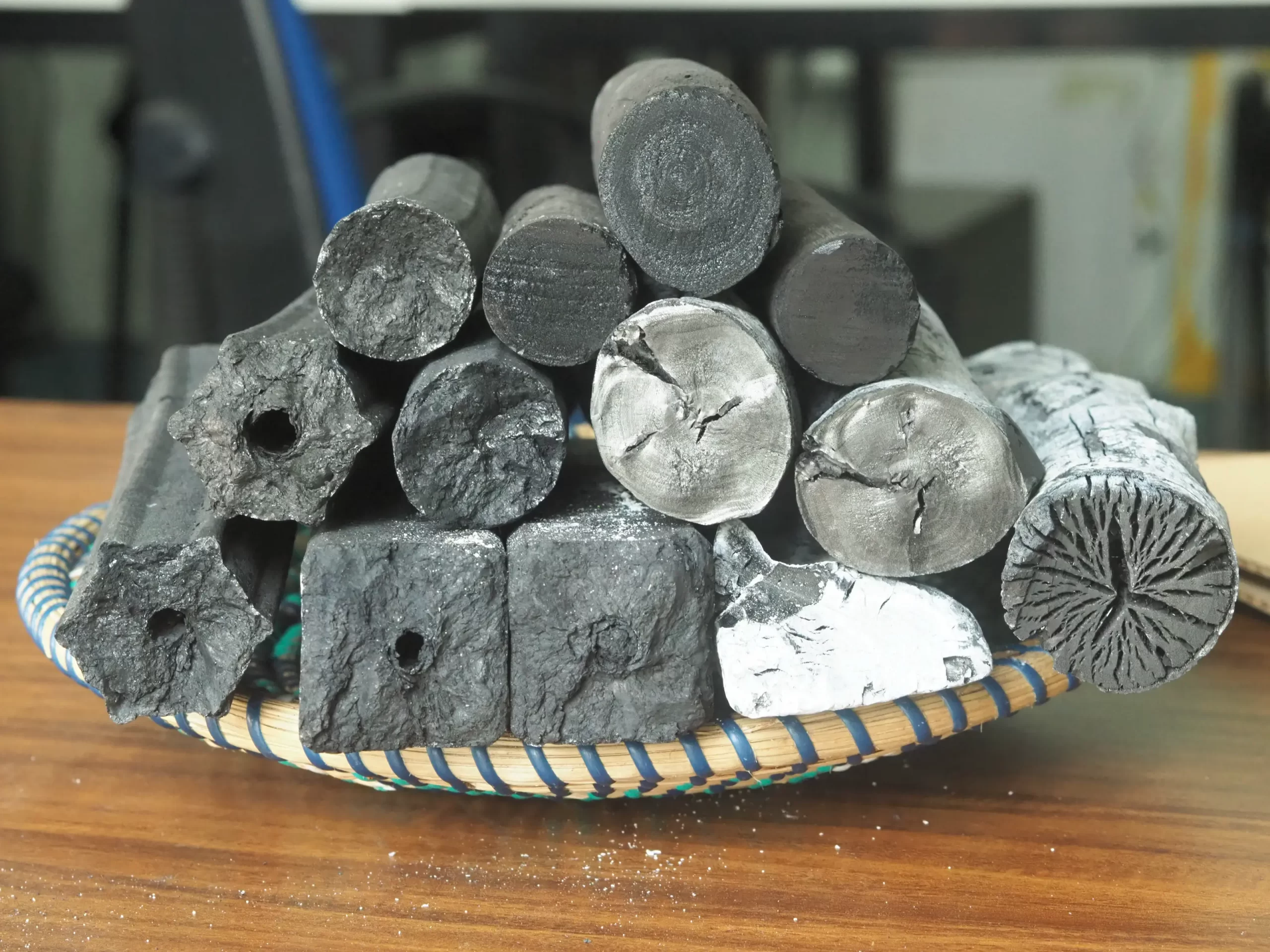
When running a food business, a BBQ restaurant, or organizing outdoor grilling events, choosing the right type of clean, smokeless charcoal is crucial for both food flavor and operational costs. On the market today, White Charcoal (Binchotan) and Ogatan (compressed sawdust charcoal) are the two most popular premium smokeless charcoal choices.
This article provides a detailed comparison between white charcoal and ogatan based on heat output, burning time, ash content, and practical application to help you make the optimal choice.
White charcoal (commonly known as Binchotan) is a top-tier premium charcoal packed with outstanding performance features for high-end grilling:
Note: White charcoal is extremely dense and may occasionally pop or crackle (爆跳) when first ignited if not handled properly. Therefore, it is highly recommended for professional chefs, upscale restaurants, and experienced BBQ masters.
Ogatan is a premium compressed sawdust charcoal engineered as a superior upgrade to traditional black charcoal:
Application: Positioned as a mid-range fuel solution, Ogatan is ideal for casual restaurants, hot pot & smoke-free BBQ chains, and daily commercial mass usage.
| Comparison Criteria | White Charcoal (Binchotan) | Ogatan (Compressed Charcoal) |
|---|---|---|
| Heat Intensity | Extremely High (The Strongest) | Higher than standard black charcoal |
| Burning Time | Approx. 7 hours | Approx. 5 hours |
| Ash Content | Low (2% – 3%) | Moderate (5% – 6%) |
| Sparking / Popping (爆跳) | Possible during initial lighting | Completely none |
| Smoke & Odor | Completely smokeless & odorless | Smokeless |
| Target Users | Professional chefs, upscale BBQ | Restaurants, diners, mid-range users |
| Cost / Value | Higher price tier | Highly cost-effective & economical |

Thank you for your continued support of Japan Link. Japan Link supports companies considering imports from Vietnam from start to finish, covering local...

Thank you for your continued support of Japan Link.We are pleased to report our delivery results for June 2026 and the first half of fiscal year 2026 below....

Oct 02, 2026

Oct 02, 2026

Oct 02, 2026
(0) Comments
Leave a Comment